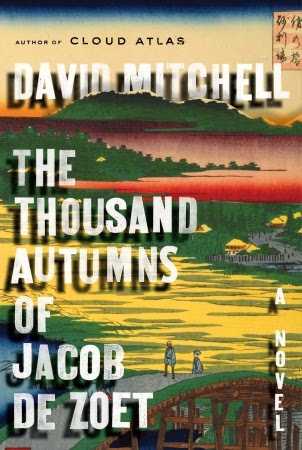
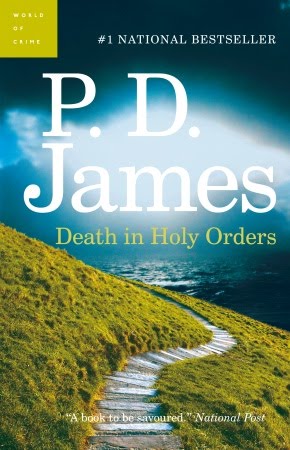
Parrot and Oliver in America by Peter Carey
Room by Emma Donoghue
The Betrayal by Helen Dunmore
In a Strange Room by Damon Galgut
The Finkler Question by Howard Jacobson
The Long Song by Andrea Levy
C by Tom McCarthy
ers in Search of an Author, and his fascination with ontology also infiltrates his fiction. In The Late Mattia Pascal, translated by William Weaver, the title character is a man who inadvertently finds himself married to a woman who isn't quite as beautiful as he'd originally thought, and who brings a truly awful mother-in-law to live with them. Escaping his household for a few days to gamble away a small sum of money, Mattia hits the jackpot, not only in the casinos but on his way home, when he reads in the newspaper that a dead body has been found near the local mill and identified as himself. With his family believing he is dead, Mattia takes his winnings and travels, finally settling in Rome under an assumed name. But the initial freedom he celebrates proves to be illusory and full of complications. If you successfully escape yourself - who then are you? To be or not to be isn't the only philosophical question debated in this novel, but it offers the most laughs. I very much enjoyed reading this entertaining comedy. The stories in Hugo Von Hofmannsthal's The Lord Chandos Letter and Other Writings, translated by Joel Rotenberg, have a slightly sinister, ethereal feel to them. The characters seem to inhabit dual worlds simultaneously - the real one, and a dream-like one conjured up by an extraordinary and ongoing emotional awareness of not only nature, but the intensity of people's fears, desires and regrets. Death both fascinates and paralyzes, as shown in two haunting stories set among soldiers - "Cavalry Story" and "Military Story". And this culminates in his most famous story "The Letter", in which the narrator laments his inability to articulate these "coded messages" or sensations that he receives:
A watering can, a harrow left in a field, a dog in the sun, a shabby churchyard, a cripple, a small farmhouse - any of these can become the vessel of my revelation. Any of these things and the thousand similar ones past which the eye ordinarily glides with natural indifference can at any moment - which I am completely unable to elicit - suddenly take on for me a sublime and moving aura which words seem too weak to describe.It's a slightly creepy collection and makes a good companion to Theophile Gautier's My Fantoms which was an earlier challenge read.
Interviews, by Sam Weller, it really is a marvellously inspiring read. 
d fit in at her new school, and she’s also very drawn to the dark, handsome and brooding Zed Benedict. Both are quite musically talented, but always seem to be at odds. It’s not until months later that Sky discovers her gift, one that she shares with the mysterious Zed. They’re both Savants who can read minds and communicate telepathically. In fact everyone in Zed’s family is a Savant, and they’ve have been working with the police to solve a high profile case. When some very dangerous criminals discover the Benedict’s connection, both Zed and Sky get caught in the fallout. Readers will identify with Sky’s feelings of being an outsider during her first days of school and her uncertain feelings about a Zed. It’s a fun, suspenseful read and a great addition to a very popular genre.

Over at Moby Lives, the blog of Melville House, they've been posting an interesting series of articles outlining their marketing ideas for Hans Fallada's Every Man Who Dies Alone. As they write:Speaking from experience, literature in translation is the hardest category for me to sell - and I represent so many imprints that publish it regularly. Which is exciting for me as I get to be introduced to so many great writers, but it certainly presents its challenges. The reading public is a funny old beast. They'll read a book in translation that wins a big literary prize (i.e Per Petterson's Out Stealing Horses) or suddenly captures the zetigeist and the bestseller lists (i.e. Steig Larsson) and as a rep, you think you can capitalize on that because Petter
son's next novel is coming out and surely people will want to read that? Or there's tons of great Scandinavian crime on your lists and Larsson fans will flock to that once the trilogy is read. And yes, there is some interest but never in the numbers you anticipate or think those books deserve. Alas. Still, we soldier on and hope that someday readers will catch on in huge numbers to how enriching reading international literature can be. (And if you love to travel, trust me, there's no greater ice-breaker than talking about writers to the locals). In the meantime, we're very grateful for presses that do put some creative energy behind marketing their books. Fallada's Every Man Dies Alone has been a huge fave of mine and I'm thrilled all the hard work is paying off.
You can read their series here. You'll notice two Canadian items of interest. One of the posts describes using subway ads on the Toronto Transit system. And under the post about t-shirts, those librarians librarians from Ontario or who have been following the Dewey Divas for a number of years, will recognize a familiar face.


PRIX TD DE LITTÉRATURE CANADIENNE POUR L’ENFANCE ET LA JEUNESSE ($25,000)
NORMA FLECK AWARD FOR CANADIAN CHILDREN’S NON-FICTION ($10,000)
GEOFFREY BILSON AWARD FOR HISTORICAL FICTION FOR YOUNG PEOPLE ($5,000)
For the full press release and more about these awards click here.
One of my Fall 2010 Dewey Picks is Kenneth Oppel's new book for teens Half Brother. I will blog about it in more detail in a few weeks, but for now I'll just say- put your holds on this one now! It had me crying on the first page and again on the last page (and several times in between if I'm being honest). It is one of those books with an entertaining story and big themes that lingers in your mind long after you have finished it. Half Brother asks some hard questions about the treatment of animals used in research projects- more specifically, what becomes of them after the project is over?
I think it is an ideal book for a teen book club, so if you run one at your library, or just have a group of kids in your branch who love Ken Oppel's books, here is your chance to get your hands on this book before publication.
The HarperCollins Canada marketing team is sending copies of the galley of Half Brother on tour across Canada. These special galleys have room inside for you to fill in comments, photos, or anything else that would reveal where the galley has been in its travels. When you are finished reading the book, we ask that you pass it along to another reader and have them do the same. The tenth person to read the book will send it back to HarperCollins in exchange for a free book! (instructions inside the galley).
THERE IS ONLY ONE TOURING GALLEY LEFT! And best of all- I've got the OK to offer it up to a library here in Canada.
So, the first person to send me an e-mail message (rosalyn.steele@harpercollins.com) with their name, library address, and phone number will receive the final touring galley. Starting now...
_______________________________________________________________
To update: Thanks to those who sent me an e-mail, but the touring galley has now been spoken for!
I had a fine young Marketing Director come and speak at my class I teach at Centennial College. He used to run a number of contests when he worked at Indigo and told us the most amazing thing: the bigger the prize the smaller number of entries they would get. If a coffee pot was the prize they would get hundreds of entries, but if it was something big like a trip they would get very few entries. He said it was because people could see themselves winning a coffee pot but not a trip. We are a weird bunch. So prove him wrong and see if one of you is lucky enough to win a fabulous trip to France courtesy of Lonely Planet.
With Spain having just triumphed at the World Cup, there's no better time to celebrate one of its best contemporary writers, and in particular sing the praises of one of the most enthralling and terrific books I've ever read - Javier MarÃas' Your Face Tomorrow, translated by Margaret Jull Costa.
when Conversational Reading , one of the blogs I regularly follow, started an online group read of the novel, I thought it was the perfect time to crack it open. And I was quickly, passionately, viscerally hooked.
wing what happens next or how these reports will be used. He's not even sure who he works for. Could it be MI5? One night he accompanies Tupra and some clients to a nightclub and unwillingly participates in a bizarre incident that changes Deza's view of his boss, causes him to seriously question his own apathy and responsibility, and subsequently leads him to act in way he never would have thought himself capable of. His "tomorrow" will indeed wear a very different face. Or perhaps he just hasn't been looking too closely in the mirror.
ing, a mysterious drop of blood, the weather, love, guilt, and above all with the notion and perceptions of time - past, present and future -ever elusive, inevitable and inescapable. The writing is spectacularly beautiful - rhythmical, inventive and astonishingly witty at times; it completely draws the reader in. This is a novel that would absolutely make my desert island list with its almost constant invitation to repeated re-read. My copy is already copiously underlined. And Javier MarÃas has now leaped onto my list of all-time favourite writers; fortunately he's written a number of books that I'm now eager to get my hands on.
For those days when you want to go hide in one.


Douglas Coupland has designed a new clothing line for Roots which goes on sale today at selected stores. Not that keen on the shirts with his signature scrawled over them or his tributes to computer motherboards, but I do quite like the test pattern hoodie and dress. You can see the full collection here.
We often don't know much about the private lives of our colleagues, and that's probably a good thing.
Frank meets Anne on a Paris train station platform and helps her with her heavy bag (full of books). They get on the train, begin a conversation, get off at the same stop, have a meal, go to an author reading at a local bookstore, end up at the same hotel, have sex, and declare their love - but not of course in that order. In the Train by Christian Oster, translated by Adriana Hunter, is very funny and very French which means love and philosophy inevitably accompany each other as slightly surreal travel companions. For fictional trainspotters with or without a lot of relationship baggage.
Hans Fallada's Every Man Dies Alone was one of my favourite books last year. Here's an interview with Fallada's son Ulrich Ditzen who thinks Wolf Among Wolves, Fallada's epic novel about life during Weimar Germany, is actually his father's best book. It's just recently been brought back into print by Melville House with the first unabridged English translation. I hope to get to it soon.

e as much pleasure and pain (or pleasurable pain) than pushing myself and my little foldable bike up a hill, or going a few extra kilometres even when I'm tired. So I have the ultimate respect for this gruelling and dangerous bike race.